Where Should Coordination Live on a Mega Project? Lessons from Two Rail Megaprojects
One of the more interesting questions in organisational behaviour is how work should be structured in complex organisations.
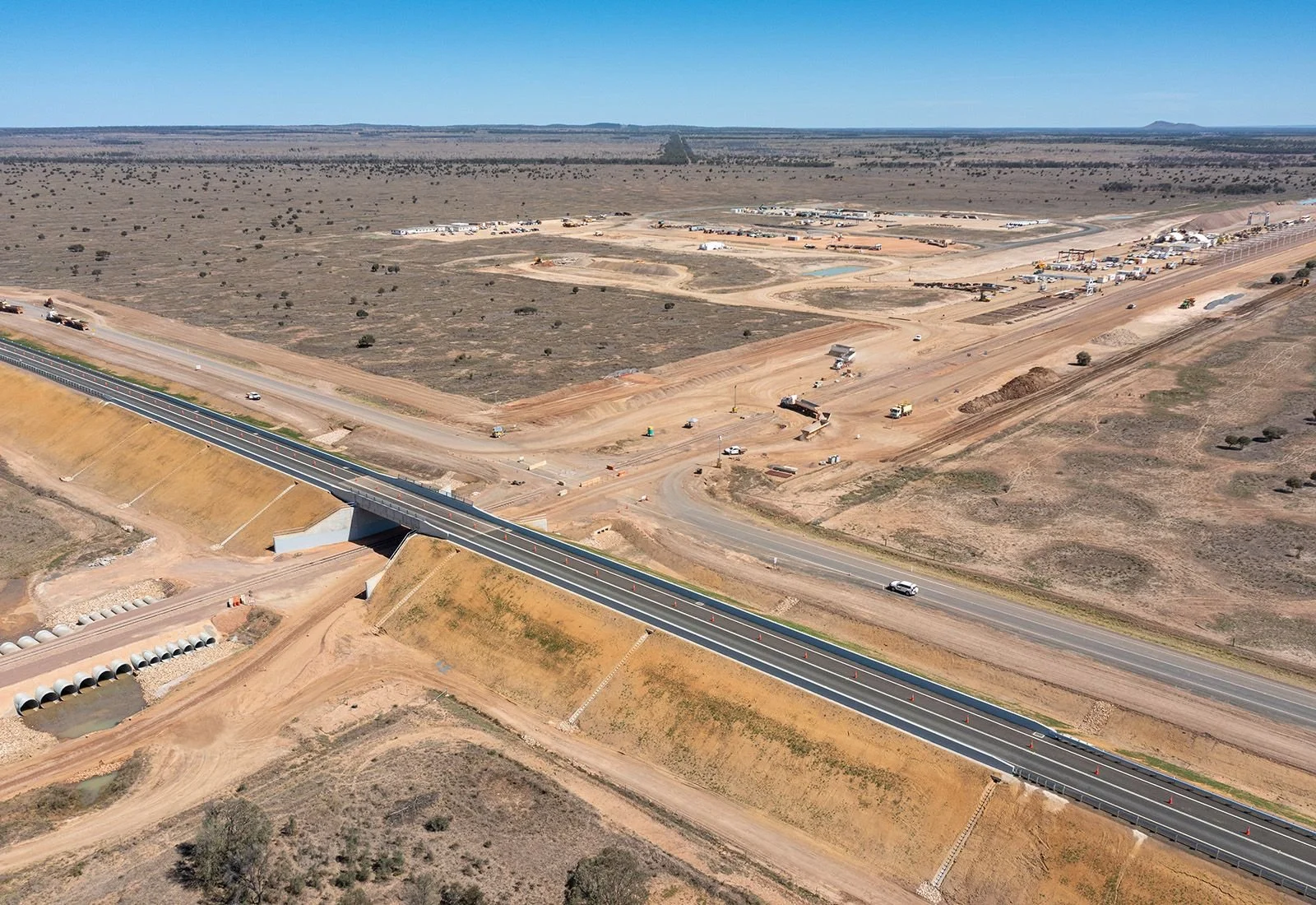
The challenge becomes particularly relevant on mega projects, where hundreds of people, multiple disciplines and dozens of concurrent work fronts must operate as an integrated system.
The research presents several competing views. Some advocate for clear authority lines and simplified reporting relationships. Others argue that increased collaboration and cross-functional decision-making produce better organisational outcomes. Like many organisational debates, the answer is rarely absolute.
Having worked on major rail projects with different organisational structures, I have seen first-hand the advantages and disadvantages of both approaches.
What I have come to believe is that the key question is not whether a project should be organised geographically, by discipline, or through a matrix structure.
The more important question is where coordination responsibility should sit within the organisation.
Option A: Geographical Alignment
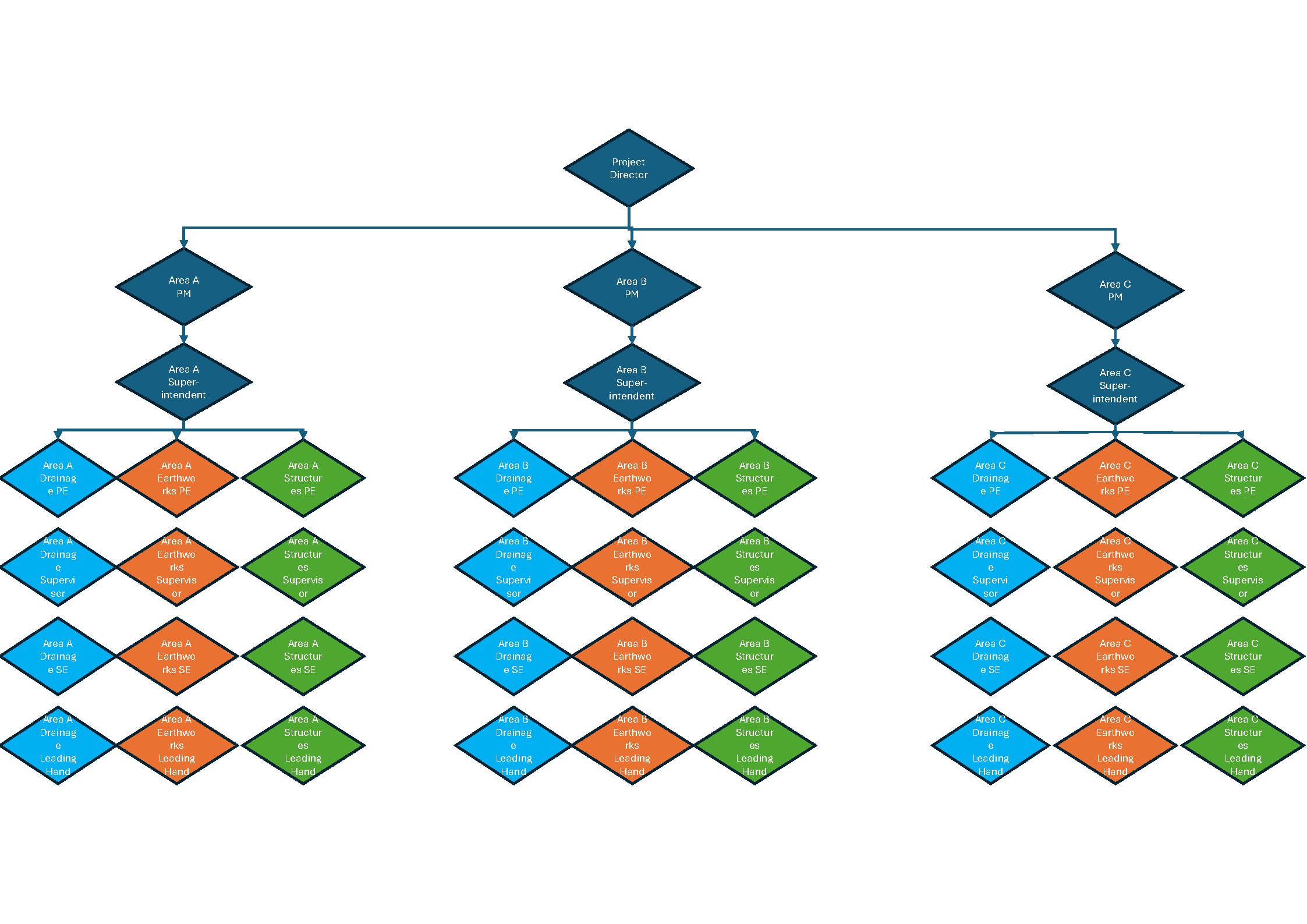
A common approach on linear infrastructure projects is to divide the corridor into geographical areas. Each area contains its own project manager, superintendent, engineers and delivery teams responsible for all works within that section of the project.
In many respects, this structure is highly effective.
Teams are closely aligned with the work they are delivering.
Reporting lines are clear.
Accountability is straightforward.
Decision-making within the area is typically fast and efficient.
The model also creates strong ownership. Teams develop an identity around their section of the project and often operate with considerable autonomy.
The downside is that the project can begin to resemble several smaller projects operating beneath a larger contract. While each area may be performing effectively, optimisation across the entire project becomes more difficult.
Resource allocation provides a simple example. Imagine Area A and Area B both require the project's only boom pump on the same day. Both pours are critical. Both teams have strong justification for why their activity should take priority. In theory, this conflict should be resolved by senior project leadership. The project director exists to ensure decisions are made in the best interests of the project as a whole.
In practice, however, it is unrealistic to expect every resource conflict, sequencing issue and competing priority to be escalated to the most senior person on the project. This structure pushes all coordination, no matter how minor all the way up to the Project Director.
As a result, these decisions are often left to be negotiated between areas, with each team naturally advocating for its own objectives. The outcome may be reasonable for individual areas but not necessarily optimal for the project overall. It also becomes a generation of unhealthy conflict and rivalry between areas competing for the same resources and prioritisation.
Option B: Discipline Alignment
The same issue can emerge when projects are structured entirely around disciplines. In this arrangement, earthworks, drainage, structures and pavements each operate as separate delivery streams with their own management and engineering teams.
The benefits mirror those of the geographical model.
Technical expertise is concentrated.
Knowledge sharing is strong.
Resources can be managed efficiently within the discipline.
However, project interfaces remain.
A structures team may need to erect a crane in a location that cuts off haul road access required by the earthworks team. The structures team is focused on advancing its works. The earthworks team is focused on maintaining production.
Neither team is acting improperly. Both are pursuing legitimate project objectives. The challenge arises because the interface between those objectives sits outside either team's direct authority.
Again, the theory is that senior leadership provides the coordination function. Again, the reality is that the volume of decisions often makes centralised coordination impractical.
Option C: The Hybrid Structure
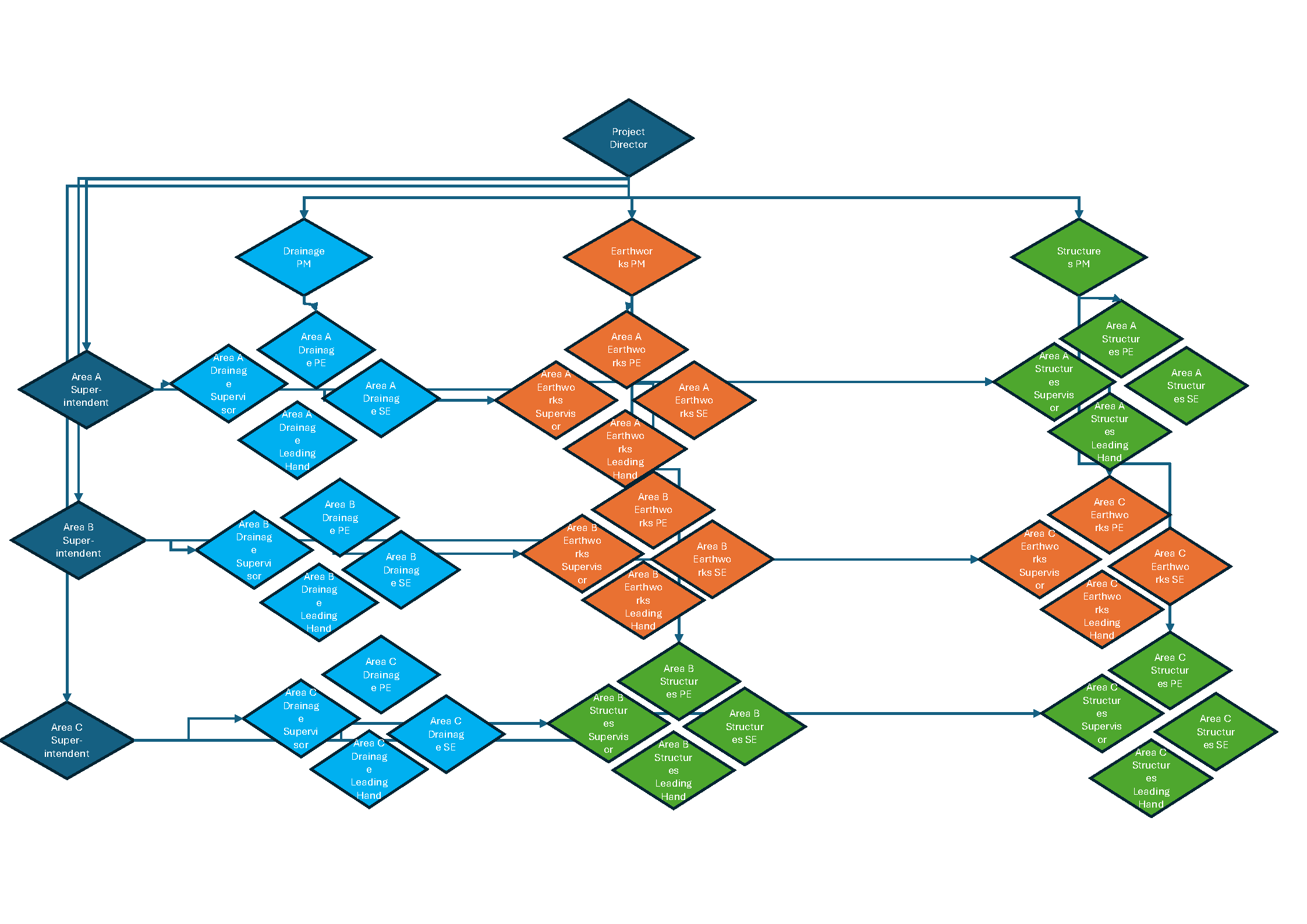
The most effective arrangement I have experienced was a hybrid model. Engineering teams were organised by discipline, while construction supervision remained organised geographically.
At first glance, the structure appeared inefficient.
An engineer responsible for drainage might need to coordinate with three superintendents operating across three separate areas. Likewise, each superintendent might be dealing with drainage, structures and earthworks teams simultaneously.
Compared to Options A and B, the number of interfaces increased significantly. The structure required more meetings, more discussions and more coordination effort. Many would view this as organisational complexity.
I eventually came to view it differently.
The additional coordination was not being created by the structure. The coordination already existed within the project. The structure simply determined who was responsible for performing it.
Coordination Is the Work
Mega projects are inherently complex systems.
Earthworks affects drainage.
Drainage affects structures.
Structures affects access.
Access affects construction sequencing.
Sequencing affects productivity, resources and programme outcomes.
No organisational chart can eliminate these interfaces. The interfaces exist regardless of how reporting lines are drawn. What changes is where the responsibility for managing them sits.
With geographical or discipline-based structures, coordination is largely concentrated at the senior levels of the organisation. With hybrid structures, coordination is distributed throughout the project team.
Engineers, superintendents and project managers are required to engage directly with one another and work through competing priorities at the level where the work is actually occurring. This creates more complexity for individuals. However, it also spreads decision-making and project optimisation throughout the organisation rather than concentrating it in a handful of senior leaders.
In my experience, this produces better outcomes. Not because the structure is simpler, it clearly is not. But because no project director, regardless of capability, can realistically maintain detailed visibility of every resource conflict, interface issue and sequencing decision occurring across a mega project.
A well-designed organisational structure should therefore not be judged on how tidy it appears on an organisation chart. It should be judged on whether it enables the right decisions to be made by the right people at the right level.
For that reason, while each model has merits, I have found the hybrid approach to be the most effective. It accepts the reality that coordination cannot be centralised on a project of significant scale and instead distributes that responsibility throughout the organisation, where the information needed to make good decisions already exists.
Read further on designing organisational and project structures to optimise for specific outcomes here: Designing the Construction Team to be more productive and harmonious. What does psychology teach us? — EngiMBA — EngiMBA