Fatigue in the Workplace is No Different to Fatigue on the Road: What the Research Says.
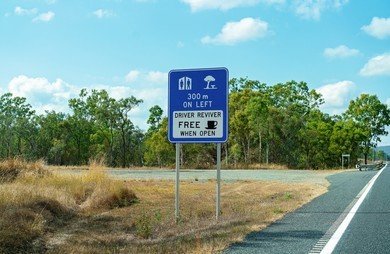
Before I set off for my six hour drive up the Bruce highway, I was reminded by my colleagues to “be safe and stop for a rest along the way”. In fact, my Mum, my Wife, and my neighbour gave me similar advice. There was an ad on the radio, billboards on the side of the highway, frequent driver reviver stops, and even trivia on roadside signs, all reminding me of the effect of fatigue on my ability to drive safely.
It had me thinking; all the public service messaging about the dangers of operating a vehicle whilst fatigued had worked. The understanding of the inherent impairment of our cognitive ability and psychomotor skills from fatigue had become common knowledge in the national psyche.

So why then, do so many of us act like humans aren’t subject to the same limitations once we clock in for work? Why are we not as sensitive to the effects of fatigue on cognitive performance in the workplace? The hindsight bias may make it seem self-evident but, only few industries institute fatigue management plans, and very few managers consider the impact of fatigue on their businesses.
This articles will look at a study from 2020 in the UK investigating the effect of fatigue on cognitive performance at a Train Operating Company.1 The study focused on 19 employees with varying occupations within the company.1 Each participant completed a visual search and logical reasoning task both before and after each shift.1 The speed and accuracy of the response was measured and compared.1 This was evaluated against the participant’s, self-reported feeling of fatigue.1 The results showed a correlation between increased feeling of fatigue and a decrease in cognitive performance.1
To many readers, this would not sound shocking. Bringing it back to the driving analogy, we all understand that our first hour of driving would be safer than our ninth hour of driving in the same shift. However, the findings of this study go beyond this basic understanding. The study was on multiple job types, including managers, conductors, drivers, station workers, engineers, and administrators.1 Thus, showing the development of fatigue from different work tasks throughout the shift. Furthermore, the tests where not limited to psychomotor skills and alertness, typical of previous studies relating to driving or operating machinery.2 Furthermore, the measure of cognitive performance wasn’t just limited to reaction time, there was a measure of the accuracy and speed of logical reasoning. This implies that fatigue has a detrimental effect on a much wider range of cognitive tasks beyond operating vehicles and machinery.
The industries that most commonly apply fatigue management plan are high risk industries dominated by psychomotor and alertness critical tasks, such as mining, truck driving, and construction. It is no coincidence that these policies closely mirror the recommendations we here from driver-reviver ads That is to rotate shifts, take frequent breaks, limit shift lengths, and to have a minimum break between shifts, among more. However, these policies have yet to take off in the myriad of other industries, despite the evidence of impairment to cognitive performance including logical reasoning.
So, how can managers use this knowledge to improve the impact of fatigue in the workplace or how can employees use this knowledge to better plan their day or week?

Unfortunately, there is no silver bullet to eliminating fatigue. However, we are still working on it. The last big breakthrough on mitigating the impact of fatigue was the introduction of the coffee break in the 1902.3 Recently, the Dutch studied the impact of blue light emitting glasses on fatigue in security guard but unfortunately found no evidence that they did anything.4 Fatigue isn’t going anywhere. In fact, with an aging population plus a rising retirement age, and fatigue increasing with age,5 the impact will only become more acute. So, it becomes even more relevant for managers to become aware and start addressing fatigue.
Firstly, managers need to understand the causes of fatigue. The study found that fatigue at the start of the shift was correlated to quality of sleep.1 However, the fatigue level at the end of the shift was associated to a higher workload.1 Another study from 2009 elaborates on the relationship between fatigue and workload to find that the optimal workload varies over time.6 The study found that the first shift in a block correlated low workload with fatigue, whereas, the final shift in a block correlated high workload with fatigue.6 This finding is supported in the 2020 study where day 1 and day 5 showed the largest before and aftereffects of fatigue on cognitive performance.1 Managers and employees can use this information to plan both their days and their weeks by ‘frontloading’ the day/week with their most difficult tasks and saving the more monotonous tasks towards the end of the day/week when they are more fatigued. Jobs that do not afford employees the freedom to schedule their own work weeks, puts more pressure on Managers to take fatigue into consideration when assigning tasks and rotations.
A 2021 meta-analysis showed strong support for the increase in cognitive performance of subjects having a short afternoon nap.7 However, the scientific consensus on the siesta may be the least difficult part of managers desire to give grown-ups a nap time in the middle of a workday.

In allot of workplaces, fatigue management policies or managerial intervention may not be the answer but simply educating employees on managing their own fatigue. Perhaps the Driver Reviver Koala could make a visit to the lunchroom in your office to encourage the same basics; having a break every couple of hours, stretching your legs, changing up the type of task you are doing, as well as a tea or coffee break. If we can get 26 million Aussies to learn about fatigue on the road, we can get the same people to practice fatigue management in the workplace.
Reference List
(1) Fan J, Smith AP. Effects of Occupational Fatigue on Cognitive Performance of Staff From a Train Operating Company: A Field Study. Frontiers in psychology. 2020;11:558520–558520.
(2) Charlton SG, Baas PH. Fatigue, work-rest cycles, and psychomotor performance of New Zealand truck drivers. New Zealand journal of psychology (Christchurch 1983). 2001;30(1):32–9.
(3) Gatu A. Coffee break: origins and why it is done [Internet]. Ponte Vecchio - Macchine a leva per caffè. 2023 [cited 2023 Oct 20]. Available from: https://pontevecchiosrl.it/en/coffee-break-origins-and-why-it-is-done/
(4) Helmhout PH, Timmerman S, van Drongelen A, Bakker EWP. The Effectiveness of Blue-Light-Emitting Glasses in Security Guards Exposed to Night Shift Work on Work-Related and General Fatigue: A Randomised Controlled Cross-Over Study. Clocks & Sleep (Online). 2022;4(4):675–87.
(5) Fera M, De Padova V, Pasquale VD, Caputo F, Caterino M, Macchiaroli R. Workers’ Aging Management—Human Fatigue at Work: An Experimental Offices Study. Applied Sciences 2020;10(21):7693.
(6) Grech MR, Neal A, Yeo G, Humphreys M, Smith S. An Examination of the Relationship Between Workload and Fatigue Within and Across Consecutive Days of Work: Is the Relationship Static or Dynamic? Journal of occupational health psychology. 2009;14(3):231–42.
(7) Dutheil F, Danini B, Bagheri R, Fantini ML, Pereira B, Moustafa F, et al. Effects of a Short Daytime Nap on the Cognitive Performance: A Systematic Review and Meta-Analysis. International journal of environmental research and public health. 2021;18(19):10212–.