For decades, construction has been told it has a productivity problem.
The proposed solution has often been technology.
BIM, digital engineering, cloud platforms, mobile applications and increasingly sophisticated project management systems have all promised to change the way the industry works. Yet many of construction's fundamental productivity challenges remain stubbornly familiar.
Now comes Artificial Intelligence (AI), accompanied by perhaps the biggest technology claims yet.
This time, however, there may be something genuinely different.
Previous waves of technology largely gave construction professionals better tools to perform their jobs. AI can increasingly perform parts of those jobs itself. It can analyse information, create documents and software, test scenarios and automate processes that previously required substantial human effort.
But that doesn't mean AI will magically solve construction's productivity problem.

To understand where the opportunity is real and where the hype may be getting ahead of us, EngiMBA spoke with Dr M. Reza Hosseini, Senior Lecturer in Construction Technology at the University of Melbourne's Melbourne School of Design.
Dr Hosseini approaches AI from an interesting position at the intersection of construction, engineering and digital technology. His academic background spans Civil Engineering, Construction Engineering and Management, and a PhD in Virtual Design and Construction, while his research covers artificial intelligence, digitalisation, BIM and emerging construction technologies. He has contributed approximately 240 scholarly papers and book chapters, with over 18,600 citations and an h-index of 76 on Google Scholar. The latest Stanford–Elsevier citation indicators (August 2026 update) place him in the top 0.46% of researchers worldwide in Building and Construction for single-year impact (2025), and in the top 1.3% for career-long impact. He also has over 15 years of experience working in various positions in the construction industry, including engineering offices and on construction sites.
More importantly for this discussion, his work isn't confined to theorising about what AI might eventually do. At the University of Melbourne, he coordinates Artificial Intelligence in Construction, a postgraduate subject examining how AI can be applied throughout the construction lifecycle and how construction organisations can approach AI adoption strategically. His research also connects with practical industry problems including AI-assisted quality management, automated visual inspection, defect detection and the integration of BIM and AI into infrastructure delivery.
He is therefore well placed to challenge both extremes of the current AI debate: the idea that artificial intelligence will transform construction overnight, and the equally simplistic view that it is merely another overhyped technology trend.
But if AI can dramatically accelerate individual tasks, an important question remains. Will making individual activities faster actually solve construction's productivity problem, or will it simply expose the constraints elsewhere in the system?
That raises a much more interesting question than whether construction companies are simply "using AI".
Can AI actually change how construction businesses work?
EngiMBA sat down with Dr Hosseini to discuss the real state of AI adoption in Australian construction, where the technology is already delivering value, where expectations are getting ahead of reality, and what an AI-enabled construction business might actually look like.
A Conversation with Dr M. Reza Hosseini
EngiMBA: Estimates of AI adoption in Australian construction range enormously. How widely do you think AI is actually being used?
Dr Hosseini: Honestly, I don't think we currently have a reliable quantitative measure.
The construction industry cannot really be treated as a single unit. It ranges from sole traders with a van or truck through to global companies employing thousands of people.
Each part of the industry operates differently.
We also have problems with the definition of construction used in surveys, the size of businesses being surveyed and who within those businesses is actually responding. One survey might ask managers or CEOs, while another captures an entirely different part of the industry.
That is why we see such a wide range of adoption figures.
Rather than having one number representing construction, we probably need to divide the industry into different sectors and understand adoption within each of them. At this stage, I don't think there is one accurate number that reflects AI adoption across Australian construction.
EngiMBA: There is another problem with measuring adoption: what exactly counts as "using AI"?
Dr Hosseini: Exactly.
If you open software from Adobe, use an academic database, search with Google or use many other digital platforms today, there is already some element of AI assisting you.
If we define AI adoption that way, arguably almost everybody is using AI.
But that is very different from changing construction procedures and fundamentally changing the way work is undertaken.
There are different levels of adoption.
Using ChatGPT to ask a question is one level. Developing your own AI-enabled software is another. Redesigning a business process so AI performs a significant part of the work, with humans providing oversight or final approval, is something different again.
At the moment, we tend to describe all these things simply as "AI adoption", which creates problems when we try to measure it.
EngiMBA: Construction has historically been described as a technology laggard. Is that reputation justified?
Dr Hosseini: Historically, yes.
Construction has generally been behind other industries in adopting new technologies.
One reason is fragmentation. Small businesses operate very differently from large companies.
Another is commercial pressure. Profit margins in construction can be very low, so companies become focused on surviving and managing their day-to-day businesses rather than investing in research and development or experimenting with technologies that might introduce additional risk.
There are also indicators suggesting construction remains behind other industries in AI adoption. Different studies use different methodologies, but the overall pattern appears fairly consistent.
The interesting point is that the speed at which construction adopts AI may not necessarily be slower. The industry is simply starting from a much lower technological baseline.
EngiMBA: Could starting from that lower technological base actually present an opportunity? Could construction leapfrog some of the technologies other industries adopted along the way?
Dr Hosseini: Potentially, but there is an important condition: AI needs data.
You still need strong procedures for collecting accurate information and converting it into formats AI can use.
Look at the industry's experience with BIM. We have had BIM models for years, particularly within larger organisations, but we haven't necessarily achieved the complete single sources of truth people once imagined.
So, the argument that construction can jump directly from older processes into AI-enabled processes has merit, but businesses still need the digital foundations underneath them.
AI is different, however, because the economic incentive can be much stronger. If organisations can genuinely reduce costs and see substantial value, that may justify making the changes necessary to jump directly towards AI-enabled workflows.
EngiMBA: What makes this AI wave different from previous construction technology waves?
Dr Hosseini: The major difference is that previous technologies generally gave people better tools.
They improved quality, provided better access to data or improved information-sharing.
AI can actually perform parts of the work itself.
You can have a tool create an Excel spreadsheet that might otherwise take someone a day or two to build. AI might produce it in 30 or 40 minutes.
You can use it to develop your own software, plan activities, take notes, manage meeting records and perform many different functions.
I would argue that almost everything we do at work has some area where AI can play a role and help us perform that activity better.
That breadth is what separates AI from many previous waves of technology.

The economic difference is that a coordination tool still needs the same people, while a system that does the first draft can take a paid hour off the job. A 2021 review of 23 studies [1] found published returns on BIM running from a loss of 83.3 per cent to a gain of 39,900 per cent. A loss of 83.3 per cent means about 83 cents lost on each dollar spent. The gain of 39,900 per cent is the top of the range, not a typical project. On the Savannah State project in the 2011 table, BIM cost $5,000 and the counted benefit was $2 million, a net return of $399 for each dollar spent [2]. The spread is too wide to treat as a reason to hire fewer people. An OECD review in April 2024 [3] put the estimated effect of earlier forms of AI on a firm’s labour productivity between 0 and 11 per cent, in the same range as earlier digital technologies. Studies of workers using generative AI on a defined task [3] found performance gains from 10 to 56 per cent.
The 0 to 11 per cent is a change in a firm’s measured output. The 10 to 56 per cent is a faster task in an early trial [3]. Checking the draft still takes time, so the larger figure is not a cut in staff.
References
[1] Sompolgrunk, A., Banihashemi, S. and Mohandes, S.R., Construction Innovation, published online 3 December 2021. https://doi.org/10.1108/CI-06-2021-0119
[2] Azhar, S., Leadership and Management in Engineering, 2011, Table 2. The 39,900 per cent is the Savannah State project. https://doi.org/10.1061/(ASCE)LM.1943-5630.0000127
[3] Filippucci and colleagues, The impact of artificial intelligence on productivity, distribution and growth, OECD, 16 April 2024. https://www.oecd.org/en/publications/the-impact-of-artificial-intelligence-on-productivity-distribution-and-growth_8d900037-en.html
EngiMBA: Where are the AI applications genuinely delivering value in construction today?
Dr Hosseini: Image processing is probably one of the clearest examples.
It predates the current generative AI wave and has developed significantly over the machine-learning era.
Image processing is already being used for progress monitoring, identifying defects in structural elements and construction processes, and even sorting construction waste.
There are real applications delivering value.
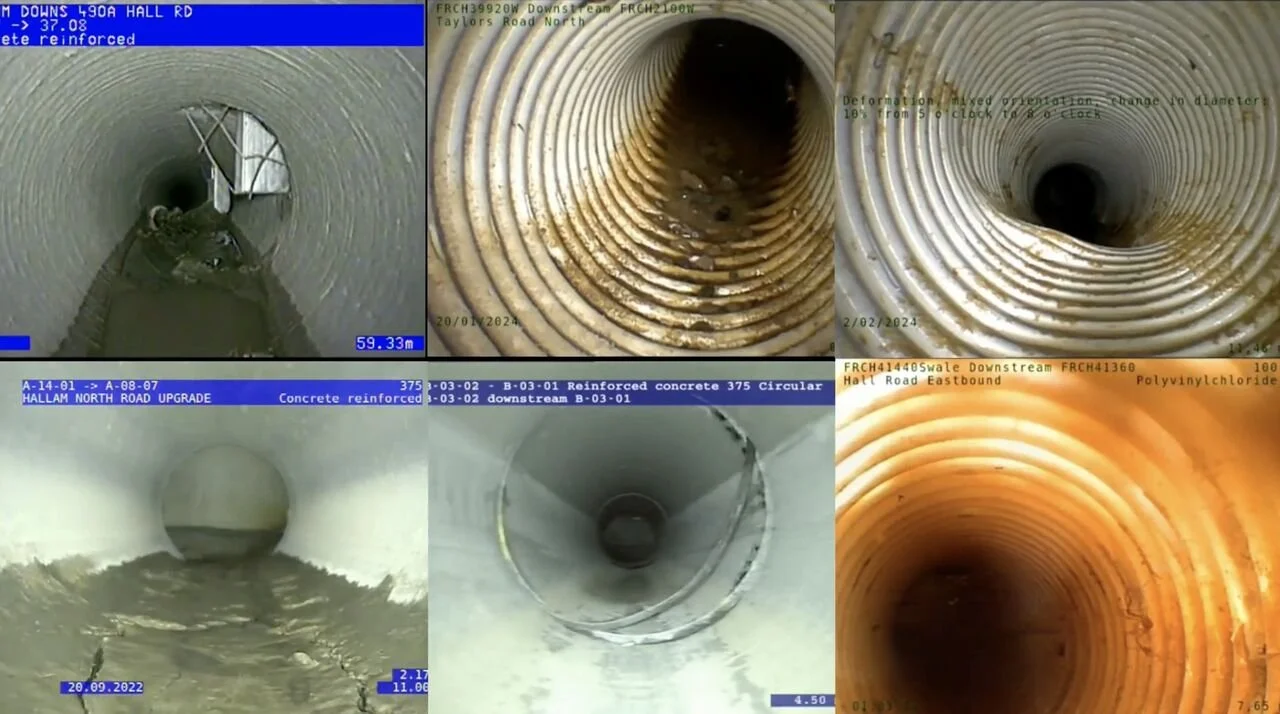
One example is the review of new underground drainage on Victoria’s Big Build. The Victorian Infrastructure Delivery Authority [4] delivers those transport projects. VIDA Roads [5] says a pilot, run with its HIVE research group, analysed 21 kilometres of drainage CCTV across nine Big Build Roads projects and involved more than 80 stakeholders, including integration and handover teams at the Department of Transport and Planning. The inspections look for defects such as rocks and rubble before the drains are accepted.
Dr Amir Soroush [6], who leads the initiative for HIVE, says the pilot showed that the combined effort across all stakeholders to review one kilometre of that footage could potentially fall from about 32 hours to about one hour. He also says eight Big Build Roads projects had joined a controlled rollout, while discussions were still underway to bring several North East Link packages in.
References
[4] Victorian Infrastructure Delivery Authority, About page. https://bigbuild.vic.gov.au/about/vida
[5] VIDA Roads, public account of the drainage CCTV pilot. https://www.linkedin.com/posts/vida-roads_artificialintelligence-infrastructure-activity-7483057041436086272-ZNH1
[6] Amir Soroush, public account of the drainage pilot and rollout. https://www.linkedin.com/posts/aasoroush_aienabled-visualintelligence-visualintelligence-activity-7483313942086393856-RiTs
EngiMBA: And where do you think expectations are currently ahead of reality?
Dr Hosseini: There are several areas where I would still be cautious.
Estimation is one. There are interesting technologies emerging, including startups converting two-dimensional information into 3D models and generating estimates, but I haven't yet seen a completely reliable AI estimating package applicable to the local industry.
Similarly, I haven't seen AI project-management applications that I would regard as sufficiently accurate to simply trust.
Structural design is another area where there is significant potential, but there are still challenges when you examine the detail of what these systems can actually achieve.
So, whenever someone claims a particular part of construction has already been completely transformed by AI, it is worth looking more closely at the limitations.
EngiMBA: If you walked onto a mature AI-enabled infrastructure project tomorrow, where would you expect AI to be used?
Dr Hosseini: Everywhere.
Not in the sense that AI would completely undertake every task, but I would expect AI to contribute to most major project processes.
In estimating, we are already seeing companies develop models that can interpret information and automate parts of the estimating process.
In planning and scheduling, AI can help analyse risk, develop alternative scenarios and continuously update information.
For compliance, an AI system can potentially reference standards and codes and check proposed work against them.
Then there is worker management, safety, progress monitoring and other project controls.
A genuinely mature AI-enabled project would not have one isolated AI tool. AI would be integrated throughout the project's procedures.
EngiMBA: As AI takes over more of a workflow, does the human-in-the-loop risk becoming the next bottleneck? And can greater automation actually help businesses identify where those constraints are?
Dr Hosseini: Yes. AI can perform the work much faster than human beings, but at the end of the process you can still have a human who needs to check and approve everything. That person then becomes the bottleneck.
Take structural design as an example. You could potentially use AI to automate significant parts of the design process, but if a structural engineer still needs to check every design and sign it off, the overall process is ultimately only as fast as the person doing that checking.
That's why I think we should start adopting AI wherever we can rather than waiting until we have redesigned every process first. As AI becomes embedded across a workflow, it becomes easier to see exactly where the bottlenecks are, which part of the business or procedure is slowing everything down, and where the constraints have moved.
Once those bottlenecks are visible, we can analyse them. AI itself can assist us in identifying those issues and analysing the different scenarios available to us. We can then look at whether that part of the process can also be improved or automated.
So, I don't think we need to solve all the structural issues first and then adopt AI. Start using AI, identify the bottlenecks more accurately, and then work on those bottlenecks.
EngiMBA: Australia has spent years discussing poor construction productivity. Can AI genuinely shift the dial?
Dr Hosseini: AI can improve productivity, certainly.
But I think many of construction's productivity problems are structural.
They involve permits, procedures, paperwork and other characteristics of how the industry operates.
AI isn't a magic solution that suddenly removes all of those barriers and transforms construction productivity overnight, despite claims out there that AI can act as a magic wand and overnight the industry becomes productive. This is not true.
It can significantly improve individual processes, but some of the industry's underlying problems still need to be addressed.
EngiMBA: Does AI risk creating a two-speed industry where Tier One contractors and consultants become AI-enabled while SMEs and trades are left behind?
Dr Hosseini: Both sides actually have advantages.
Large organisations have resources. They can invest in training, software subscriptions and technology.
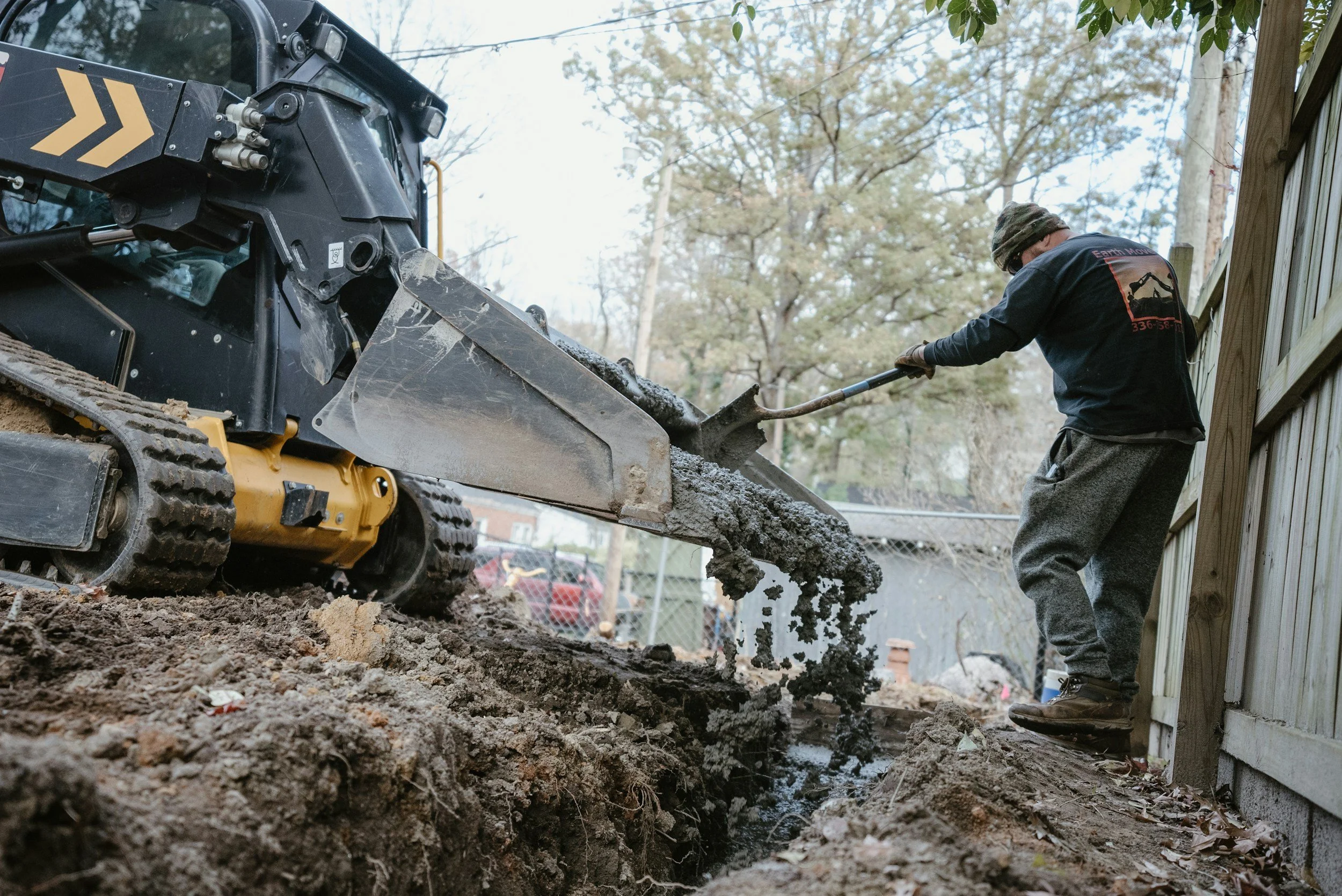
But small businesses are agile.
A sole trader or small company can make a decision and change its process quickly. Large organisations may need multiple levels of management approval and have much more significant cybersecurity, integration and governance issues.
There is also a potentially powerful economic benefit for smaller businesses.
I recently spoke to somebody who wanted an application developed for their business and was quoted around $20,000. They decided against it and instead used AI and vibe coding to build something themselves for approximately $100.
That is significant.
AI potentially gives very small businesses the ability to create customised software, spreadsheets and applications that previously would have been economically inaccessible to them.
So while smaller businesses have traditionally lagged larger companies in technology adoption, AI could also give them new capabilities.
And eventually, if larger contractors move towards AI-enabled systems, smaller businesses working with them may need to adapt simply to continue exchanging information and collaborating effectively.
A published case from Adelaide shows what that agility can look like in a firm small enough for one manager to hold the schedule. DC Roofing Contractors S.A. [7] is an Adelaide roofing business with 36 staff and 50 or more contractors. Its technology partner, Commuserv, reports that the construction manager was spending four to five hours a day rescheduling on a spreadsheet, and that the firm was close to hiring a full-time scheduler at $80,000 to $100,000 a year. Commuserv says a first version of an AI scheduling tool, built on the Microsoft 365 platform the firm was already using, took six weeks, after two years spent putting that platform in place. The same account says rescheduling now takes minutes, and its headline presents more than $100,000 a year saved in a planned headcount increase and in training costs. The account is the contractor’s and the vendor’s. What it shows is the speed of the decision: the build sat inside one business, on software the firm already paid for.
The large-contractor version is slower, and it spends its advantage on control. Microsoft’s account of John Holland [8] says the company built a private ChatGPT with Microsoft in 2023, open to employees, because a public tool would have put company and client data outside the business. That account gives the tool more than 200 unique users a day and over 1,000 queries a day. It also says 260 of 300 Copilot for Microsoft 365 licences had been issued, after the trial started with the IT team in October 2023 and then moved into building, infrastructure, rail and transport, and major projects. A survey of those users found that they believe they save 30 to 60 minutes a day. Bastian Uber, quoted there as John Holland’s chief digital and information officer, says that a person still has to check what the tool produces. Those time figures are what the users reported, not a measured study of project hours.

The part that shows the scale is the core system, not the chatbot. In May 2023 iTnews [9] reported that John Holland’s finance platform had moved to Workday, while the system that manages the life of its projects was still being replaced, and that both upgrades connect to 20 other places through APIs and to the company’s older systems. The same report says that in 2021 the company’s then chief digital and information officer, Roger Wahl, put the finance and operations upgrade at up to five years, because a mega-project can run for the best part of a decade. Wahl has since left. The five years was his judgement in 2021. A roofing firm can change a schedule in weeks. A contractor of this size has to change the platform under work that is already underway, and it can afford the private tool, the licences and the rule that client information stays inside the company.
References
[7] Commuserv, DC Roofing case study. https://commuserv.com.au/wp-content/uploads/2026/10/Commuserv_DC_Roofing_Case_Study.pdf
[8] Microsoft Australia, John Holland and generative AI. https://news.microsoft.com/en-au/features/copiloting-construction-john-holland-embraces-generative-ai-to-enhance-the-productivity-of-its-workforce/
[9] iTnews, John Holland works to digital construction strategy 2025, 16 May 2023. https://www.itnews.com.au/news/john-holland-works-to-digital-construction-strategy-2025-594309
EngiMBA: Where might industry-wide innovation come from then?
Dr Hosseini: Startups could be particularly important.
Building or fine-tuning large AI models is extremely expensive. Training models, operating data centres and paying for computing capacity can cost millions of dollars.
It is difficult to identify a single organisation within Australian construction that could realistically develop an industry-wide model at that scale.
But startups can solve specific problems.
A startup develops a useful solution. A few companies adopt it. If it proves valuable, more companies follow. Eventually that technology diffuses across a significant part of the industry.
There is an argument within construction innovation research that many of the major changes in the industry will not originate inside the biggest construction companies.
They will come from startups developing solutions that change the industry's processes.
EngiMBA: Does AI adoption need to be coordinated across the industry, or will competitive pressure ultimately drive it?
Dr Hosseini: Generally, I favour allowing businesses to make those decisions.
We saw different approaches with BIM. Some countries mandated BIM use for particular projects, whereas Australia largely allowed businesses to assess its value themselves.
There is logic to that approach.
If AI creates genuine value and companies can see evidence of increased profit or productivity, there is little reason they wouldn't adopt it.
If the challenges outweigh the benefits, forcing companies to adopt it doesn't necessarily make sense.
Competitive markets allow organisations to customise technology around their businesses, observe competitors and determine where AI genuinely provides a competitive advantage.
EngiMBA: How does Australian construction compare internationally? Are we behind?
Dr Hosseini: I don't think Australian construction is particularly behind comparable countries.
Australia is generally receptive to innovation and digital technology.
Culture may play a role. Australians tend to welcome new ideas and innovations. Geography may contribute as well. Being geographically remote from much of the world creates an incentive to use digital technology to overcome distance.
There is also significant development around data centres and AI infrastructure in Australia.
I certainly see innovations emerging elsewhere internationally, but I don't see a substantial underlying gap between what is happening here and other leading countries.
Australia potentially has a strong position from which to develop further but I don’t think we can say confidently if we are ahead or behind because of a wide range of measures and various indices and definitions.

Within Australia, the official count is straightforward. In 2024–25 the Australian Bureau of Statistics [10] found that 6 per cent of construction businesses used AI, against 12 per cent of businesses overall. On its industry list construction was 14th of 17. A National AI Centre [11] reading for December 2025 to February 2026 put construction and agriculture together at fewer than 30 per cent of small and medium firms, against 43 per cent of such firms across the quarter. The Bureau’s Business Characteristics Survey is a sample of about 7,000 employing businesses, with all businesses of 1,000 or more employees included, and its estimates stand for employing businesses. AI is one item on its list of information and communication technologies. The Centre asks small and medium firms how far their use has gone. Construction is in the lower part of the Australian range rather than at the bottom: three industries sit lower on the Bureau’s list (accommodation and food services at 5 per cent, agriculture, forestry and fishing at 3 per cent, and transport, postal and warehousing at 1 per cent), and the Centre groups construction with agriculture among the lower adopters.
Official counts in Europe and Britain put construction in the same position, on their own questions. In the European Union’s 2025 enterprise survey [12], 19.95 per cent of enterprises with 10 or more employees used at least one AI technology, and construction was at 10.79 per cent, the low end of the activities published. The Office for National Statistics [13] puts construction in the United Kingdom at 13 per cent, against 58 per cent in information and communication. In the same release, use among UK businesses with 10 or more employees had risen to about 35 per cent. Both counts cover firms with at least 10 employees and use their own question, so they are not a restatement of the Australian 6 per cent. In each of them, construction is at the low end of the industry list.
The higher percentages in industry headlines come from a narrower question. Dodge Construction Network and CMiC [14] reported in December 2025 that 87 per cent of the United States contractors in their study believe AI will have a meaningful impact on construction, while 19 per cent had adapted their workflows. The figures are for the contractors who took part.
Use of Claude is a separate measure from a firm survey. In Anthropic’s Economic Index [15] for May 2026, Australia’s usage index was 6.40, first of 121 countries. The United States was 3.87, in twelfth place, and the United Kingdom was 3.35, in sixteenth. The index divides Claude use by each country’s share of the working-age population. It describes one assistant, not a survey of construction businesses. In the February 2026 sample, set out in Anthropic’s 31 March account [16], Australia was seventh, at 4.1.
In the same May release, Anthropic’s May 2026 data file [17] puts Construction and Extraction at 0.11 per cent of Australian Claude conversations, 0.14 per cent in the United States, 0.10 per cent in the United Kingdom and 0.10 per cent worldwide. The group covers site trades and mining. Architects, engineers and construction managers are classified in other groups. The figure is a share of Claude conversations, not a share of firms. The shares are close, and because Australia’s overall use is higher, a similar share is not the same rate of use for someone in construction.
Size changes the rate as well. The OECD’s 2026 review of AI and the labour market [18] reports that, across OECD countries in 2024, 40 per cent of firms with 250 or more employees used AI, 20 per cent of firms with 50 to 249 employees, and 12 per cent of firms with 10 to 49 employees.
References
[10] Australian Bureau of Statistics, Characteristics of Australian Business, 2024-25, released 25 June 2026. https://www.abs.gov.au/statistics/industry/technology-and-innovation/characteristics-australian-business/latest-release
[11] National AI Centre, AI adoption insights, December 2025 to February 2026. https://www.ai.gov.au/news-and-insights/blog/ai-adoption-insights-december-2025-february-2026
[12] Eurostat, Use of artificial intelligence in enterprises, 2025 survey. https://ec.europa.eu/eurostat/statistics-explained/index.php?title=Use_of_artificial_intelligence_in_enterprises
[13] Office for National Statistics, Artificial intelligence in UK businesses, 2023 to 2026, released 20 July 2026. https://www.ons.gov.uk/businessindustryandtrade/business/businessservices/articles/artificialintelligenceinukbusinesses/2023to2026
[14] Dodge Construction Network and CMiC, press release, 5 December 2025. https://www.businesswire.com/news/home/20251205015633/en/New-Research-Reveals-Strong-Contractor-Optimism-About-AIs-Transformative-Impact-on-Construction-Industry
[15] Anthropic, Economic Index, updated 26 June 2026, May 2026 usage. https://www.anthropic.com/economic-index
[16] Anthropic, How Australia uses Claude, 31 March 2026, February sample. https://www.anthropic.com/research/how-australia-uses-claude
[17] Anthropic, Economic Index data file, Claude chat and Cowork, May 2026. https://huggingface.co/datasets/Anthropic/EconomicIndex/blob/main/release_2026_06_26/data/aei_claude_ai_2026-06-26.csv
[18] OECD, Recent policy developments on AI in the labour market, 24 July 2026. https://www.oecd.org/en/publications/recent-policy-developments-on-ai-in-the-labour-market_c0ffced7-en.html
EngiMBA: What skills should young civil engineers develop now that might not have been as important five years ago?
Dr Hosseini: This is a crucial question because AI is changing what we mean by education and skills.
We increasingly have access to systems capable of performing tasks that previously required significant training. There is a risk that people delegate too much of their thinking and simply become administrators managing different AI agents.
Education therefore needs to show graduates how AI applies specifically to their discipline.

For a construction manager, that might mean understanding how AI can influence scheduling, estimating, project management and quality control.
But I think we should go further.
We shouldn't simply train people to use existing solutions. We should give them the confidence and skills to build solutions themselves.
Rather than educating construction managers only to become employees of existing organisations, we should also prepare them to identify industry problems, establish startups and use AI to develop new solutions.
That capacity to create, rather than simply consume, AI technology could become increasingly important.
The practical problem is that the work a graduate used to learn on is the work the tool does first. An OECD review of the economics of AI [3] says generative AI puts knowledge-intensive occupations at risk of automation especially at entry level, and it warns that replacing large parts of entry-level work could remove rungs from the professional ladder. The OECD’s work on the future of work [19] looks at vacancies in ten countries and finds that the occupations most exposed to AI include engineering professionals. The page does not publish a list of the most exposed occupations that names the building trades and leaves them off, so their lower exposure is an inference. It is a reasonable one: the underlying skills paper’s least-exposed examples include helpers to painters and plasterers, and reinforcing iron and rebar workers. Those vacancies ask for management, business process and working with other people, rather than for a machine-learning qualification. In that high-exposure group, 72 per cent of vacancies asked for at least one management skill and 67 per cent for a business-process skill. The share asking for originality, meaning creativity and new ideas, rose from 25 per cent to 33 per cent. Australia is not one of those ten countries.
The same 2026 policy review [18] finds that public and jobseeker programmes often focus on specialist AI and digital skills, while “the majority of workers will need only general AI literacy skills to use and interact with AI systems.” In a survey of 21 OECD countries, nine programmes aimed at AI professionals and seven at general literacy. The judgement to check the output is this article’s reading of what that literacy involves, not a finding of the review. The review covers the G7, the European Union and several Latin American countries. For a construction manager, the hour with a graduate is the work those vacancies ask for more often: framing the question, challenging the output, and signing the decision. The tool can do the first draft. It cannot own the work.
References
[3] Filippucci and colleagues, The impact of artificial intelligence on productivity, distribution and growth, OECD, 16 April 2024. https://www.oecd.org/en/publications/the-impact-of-artificial-intelligence-on-productivity-distribution-and-growth_8d900037-en.html
[19] OECD and GPAI, The Future of Work. https://oecd.ai/en/working-group-future-of-work
[18] OECD, Recent policy developments on AI in the labour market, 24 July 2026. https://www.oecd.org/en/publications/recent-policy-developments-on-ai-in-the-labour-market_c0ffced7-en.html
EngiMBA: Finally, if you were running an Australian construction company tomorrow, what are the first three things you would do to prepare it for AI?
Dr Hosseini: First, I would start with data.
What information does the business have? What formats is it stored in? How can we create digital information that AI can use easily and economically?
Second, I would examine our processes.
I would look at where procedures could be automated and where AI could reduce the cost or effort required to undertake them.
Third, I would invest in people.
Employees need training. They need to understand AI and be prepared and willing to use it.
But governance matters as well.
Companies have genuine legal responsibilities around client information and intellectual property. If an employee uploads a client's design or confidential information into a public AI platform, the company needs to understand where that information is going and what obligations it has to protect it.
Some organisations respond by using locally hosted models, which can improve control over sensitive information. But those systems present another trade-off: internally managed models can quickly fall behind frontier models that are improving almost every week.
That tension between capability, security and control is going to be a major issue for organisations adopting AI.
What Happens Next?
There is plenty of hype around AI, but Dr Hosseini’s advice to construction businesses is surprisingly practical: get your data in order, look at your processes and invest in your people.
Businesses don't need to wait until every process is perfect before they start. Apply AI where there is a clear benefit, see where the next constraint emerges and then determine whether that part of the process can also be improved or automated.
This is probably where the distinction between using AI and becoming AI-enabled matters most. Using ChatGPT, Copilot or AI features within existing software might make an individual more productive. Becoming AI-enabled means looking at how those tools fit into the broader workflow and whether they can improve the way the business operates as a whole.
As more parts of those workflows are automated, some of the existing constraints will inevitably move. A task might become considerably faster, only for human review, poor data, an approval process or another part of the workflow to become the new bottleneck. Some of those constraints may be suitable for further automation, while others will still require people, judgement or changes to the underlying process.
AI isn't going to solve all of construction's productivity problems, and there will be plenty of areas where human oversight remains necessary. But businesses don't need to solve every one of those problems before they start.
Key Takeaways
Understanding the opportunity
· AI is different from earlier technology waves. BIM and cloud platforms gave people better tools; AI can perform parts of the work itself, from drafting spreadsheets to building software.
· "Using AI" covers very different things. Asking a chatbot a question, building your own AI-enabled software and redesigning a process so AI does most of the work are different levels of adoption. Be clear which one you are measuring.
· Be sceptical of big claims. AI estimating, project management and structural design are promising but not yet reliable enough to simply trust.
· Adoption numbers are not comparable. Surveys differ in definitions, business size and who responds, so treat any single figure with caution. On most measures, though, construction sits behind other industries and is starting from a lower base.
· Productivity gains will not arrive overnight. Many of construction’s problems, such as permits, procedures and paperwork, are structural, and AI improves individual processes rather than removing those barriers.
Implementation tips
· Start with your data. Know what information you hold, what formats it is in, and how to make it usable by AI cheaply and accurately. AI needs good data.
· Examine your processes. Look for procedures where AI can cut cost or effort, rather than waiting until every process is redesigned.
· Start now and let the bottlenecks show themselves. Apply AI where there is a clear benefit, see where the constraint moves, then improve or automate that part next.
· Plan for the human-in-the-loop. If an engineer must still check and sign off everything, the process is only as fast as the checker. Design review steps deliberately.
· Invest in people. Train staff so they understand AI, are willing to engage with it, and see how it applies directly to their discipline.
· Set governance early. Client information and intellectual property carry legal obligations. Decide what can go into public tools and weigh the trade-off that locally hosted models improve control but can fall behind frontier models.
Strategy
· Size shapes the approach. Small firms can decide and change quickly, and AI can give them custom software at a fraction of the old cost. Large contractors have resources but face approvals, cybersecurity, integration and governance.
· Small firms will follow the large ones. As larger contractors move to AI-enabled systems, their supply chains will need to adapt to exchange information with them.
· Expect innovation from startups. Few organisations can build industry-wide models, so targeted solutions from startups are likely to diffuse across the industry.
· Australia is not clearly behind. Culture, distance and supportive policy help, but the measures and definitions vary too much to say confidently whether we are ahead or behind.
· Build the next generation’s skills. Entry-level work is most exposed, so develop judgement, framing the question, challenging output and owning the decision, and the confidence to build solutions rather than only consume them.
The bottom line: get your data in order, look at your processes, invest in your people, and keep moving. The businesses that benefit most will start where there is value and keep removing the next constraint.
Read on with Maverickism: The Key to Innovation in the Construction Industry - with Dr. Ree Jordan — EngiMBA